





Thorin was the name given to a Neanderthal specimen found amongst a small group of Neanderthals that lived between 42,000 years and 52,000 years ago in the Grotte Mandrin, a cave located in southern France.
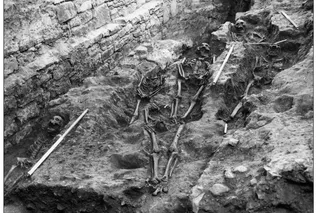
According to a 2024 study in Cell Genomics, Thorin was a Neanderthal found in Eurasia, and he’s genetically similar to the Gibraltar Neanderthals, who lived across the continent. Thorin was an adult male, identified through 30 fossilized teeth and bones, and buried at the mouth of the cave.
Life for Thorin the Neanderthal
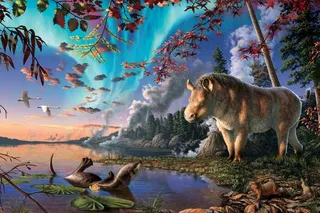
“It was very cold in Europe at the time, a very arctic ambiance,” says archaeologist Ludovic Slimak, lead study author and author of The Naked Neanderthal. And Europe would have been filled with ice age beasts that included woolly rhinoceros, as well as bison, Irish elk, and woolly mammoths.
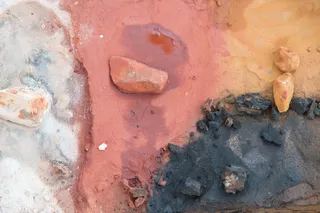
Four archeological layers that came from four distinct periods of time are found inside the Grotte Mandrin. Thorin was buried in the very last layer, which tells us that he’s from the most recent layer and is among the last remaining populations of Neanderthals, says Slimak.
This group of Neanderthals probably numbered around 40 to 200 and had been genetically isolated from other Neanderthals for nearly 50,000 years. It was one of the last remaining groups of Neanderthals to survive. It’s also worth noting that archaeologists found Thorin buried at the entrance of the cave, so it’s unclear whether the population buried its dead or not, based on the findings.
Read More: DNA Analysis Reveals 7,000 Years of Human-Neanderthal Relations
Neanderthals Were an Isolated Population
This last culture of Neanderthals would have lived alongside a large group of Homo sapiens who arrived in Europe from Africa and began spreading throughout Europe to Spain, Italy, and France. This group is known as the “third wave” of early humans coming onto the continent in droves and growing numbers.
Interestingly, says Slimak, Thorin and his ancestors within this group of Neanderthals were isolated and did not show any traces of ancient humans in their DNA. This is a surprising feat considering that research has shown Neanderthals and humans regularly interbred. Even today, they contribute 1 percent to 4 percent of their DNA to humans across the globe.
Judging by the flints that this Neanderthal population would have used, as well as by studying isotopes that show the water they would have drunk, researchers can also tell that they lived within a particular area and did not venture beyond it. They didn’t cross the Rhone River even though at the time it would have been frozen over for much of the year and easy to traverse.
Thorin Was One of the Last Neanderthals
According to Slimak, this seems to run counter to how H. sapiens existed. They moved about constantly and had relations with all sorts of different populations along the way. They established social connections and therefore a sort of uniformity that Neanderthals didn’t seem to have. This might have contributed to why humans lived and Neanderthals went extinct.
“This is something that is deeply rooted in Homo sapiens,” says Slimak. “This new way that Homo sapiens behaved was super efficient and allowed them to spread their culture where ever they went.”
It’s through the establishment of these social structures that they were able to pass on knowledge and rules across large swaths of territory and over multiple generations. Thorin was among the last of a dying breed of Neanderthals, whose culture may have been similar, but on a deeper level, their view of the world was much more isolated.
Read More: 10 of the Most Important Neanderthal Fossil Discoveries
文章来源
我们的Discovermagazine.com作家在文章中采用同行评审研究和高质量来源,我们的编辑会审阅科学准确性和编辑标准。请查看本文使用的以下来源
Cell Genomics. Long genetic and social isolation in Neanderthals before their extinction
Smithsonian National Museum of Natural History. Ancient DNA and Neanderthals