



阿米尔·D·阿泽尔经常撰写关于物理学和宇宙学的文章。他的关于希格斯玻色子发现的书,《诞生之时:发现希格斯玻色子》,于2012年11月由百老汇图书公司出版。 如果有人告诉你,有天使漂浮在太空中,观察我们的世界并形成他们对我们日常现实的印象,你会认为这个人是疯子——一个想象力活跃的宗教狂热分子,当然不是一个科学家。我们都知道,科学家是理性的存在,他们只相信大自然通过实验和观察向我们揭示的东西,以及永远不会脱离他们所做的物理测量的理论。这两者之间的联系仍然受到严格的科学方法规则的严格监管。那么,你如何解释这个奇怪的事实呢?大约五年来,世界上一些最著名的物理学家一直在描述一种情景——他们似乎真的相信这可能是真的——在这种情景中,空间并没有被圣经中的天使渗透,而是被非实体化的大脑渗透。这些紧凑的、有意识的观察者,被称为“玻尔兹曼大脑”,在浩瀚的星际空间中巡游,并超越它,进入一些科学家认为存在于我们通过望远镜和卫星观察到的宇宙之外的无限“多元宇宙”。 他们的意识使玻尔兹曼大脑重现我们的现实。他们想象着类似于你我在这里地球上体验的生活,以至于这些在太空中的大脑可能认为它们生活在像我们这样的星球上,它们甚至可能就是我们。一些最近的物理学论文和评论甚至探讨了宇宙中玻尔兹曼大脑的数量与“真实”大脑相比的可能限制,以努力估计我们是真实的还是玻尔兹曼实体的概率。
This idea, to any reasonable observer, would seem like something beyond "The Matrix," beyond the surrealism depicted by a Dali painting, beyond the wildest imaginable work of science fiction. And yet, the physicists and cosmologists who have been contemplating and advocating such a bizarre picture of reality are among the most renowned and include names such Alan Guth of MIT, Leonard Susskind of Stanford, and Sean Carroll of Caltech (who writes a blog for this magazine; his blog post on this very idea can be found here). So, what is a "Boltzmann brain"? Ludwig Eduard Boltzmann (1844-1906) was an Austrian physicist who pioneered statistical mechanics and derived the famous equation for the entropy (or degree of disorder) of a system: S = k log W, where S is entropy, k is Boltzmann's constant, log is the natural logarithm, and W is the frequency of occurrence of a macrostate of the system (such as pressure or temperature). The second law of thermodynamics implies that the entropy---the degree of randomness, or disorder---of any closed system never decreases (and generally increases). To better understand randomness and entropy---and to get a feel for why entropy naturally increases---think of a child's room that is neat and orderly at the beginning. Then the children come in and play, and afterwards you always find complete chaos: the electric train tracks are strewn all over the carpet, there is a toy truck upside down, a couple of dolls have been randomly thrown on the floor, and a chair is lying on its side. Then the child's mother comes into the room and expends energy (perhaps 20 calories, equivalent to running on your treadmill for 2 minutes) to restore order to the room. Energy and entropy are indeed related concepts---as we see here through the fact that investing energy can bring back order to the system and thus reduce its entropy. So a high-entropy state is "normal," while creating order is something that requires concentrated, directed energy. This is an important observation. Boltzmann wondered why our observed universe seems so orderly rather than completely random, as one might expect as the "natural" state of the universe. He obviously was never stuck in rush-hour traffic in Manhattan, or downtown Taipei or Tel Aviv. And he hypothesized that perhaps our portion of the universe is just a statistical fluke: an aberration within a wider universe in which randomness reigns supreme. So a Boltzmann brain, named after him, is a brain--a conscious observer--that materializes out of the disorderly universe purely by chance (a very, very small chance, I must emphasize) in the same way that, as Boltzmann had suggested, our entire universe may have emerged out of a wider chaotic multiverse purely through a random event. As Andrei Linde of Stanford put it in an interview with the New York Times: "It's cheaper" to create just a disembodied brain than it is to make a universe. But is it, really? Connecting to the Higgs boson I will come back to this question shortly, but first I want to talk about the Higgs boson. What does it take to "create" a single subatomic particle, a Higgs boson? If you've followed the story of the search for the Higgs, which culminated with great excitement in a press conference at CERN, near Geneva, Switzerland, on July 4th of this year when the Higgs discovery was announced, then you know a few things. You know that it takes expending an energy that is equivalent to the entire electric power consumption of a city the size of Geneva, running continuously for several years in a highly concentrated way---many trillions of protons are accelerated to close to the speed of light and then directed very precisely to crash into other protons---just to create a few Higgs bosons. And the Higgs is highly ephemeral: it lives for a tiny fraction of a second--something like 0.0000000000000000000007 seconds. Then it decays into other particles. The reason that the Higgs lives for only such a minuscule fraction of a second is the celebrated Heisenberg's Uncertainty Principle. According to this principle, there is a quantum-mechanical constraint on the product of time and energy. Since the Higgs has a mass that is equivalent to an energy of 125.3 GeV (billion electron volts), it can only live for a very small fraction of a second. (A muon, on the other hand, can live much longer---for 2.2 millionths of a second---because its mass-energy is much smaller.) Now back to the Boltzmann brains: The proponents of cosmic inflation, Alan Guth (who first proposed the theory in 1980) and Andrei Linde and Alex Vilenkin (who both independently argued that inflation is eternal), have come to the conclusion that the multiverse must exist because the inflationary process undergoes quantum fluctuations. So even though the inflation that worked its magic on our universe ironing out any primeval "kinks" to create the "flat," or mathematically Euclidean universe we see today seemed to come to a stop, it never did. It just went elsewhere. It is now doing its trick on infinitely many other universes. These three physicists (together with Andrea de Simone of MIT, Mahdiyar Noorbala of Stanford, and Michael P. Salem of Tufts) recently wrote an article that attempted to set some bounds on the number of Boltzmann brains in the multiverse and the spacetime volume of the multiverse. But the existence of both Boltzmann brains and an infinite multiverse rely on probability theory within the context of the deep mathematical concept of infinity. And physicists have traditionally had a very uneasy relationship with infinity. At least eight extremely gifted individuals have been awarded Nobel Prizes in physics for the great achievement of removing infinities from physical theories! These are Richard Feynman, Julian Schwinger, and Sin-Itiro Tomonaga; Gerardus 't Hooft and Martinus Veltman; and Frank Wilczek, David Gross, and H. David Politzer. Infinity has until recently been the scourge of theoretical physics, and the people mentioned above have established various quantum field theories--essential to modern physics--by ingenious and painstaking work of making infinite answers (which physicists consider completely nonsensical) disappear from calculations. This task is called "renormalizing a theory." But now, after Linde and Vilenkin have argued that inflation must be eternal (and string theory and the "many worlds" approach also imply the existence of other universes), infinity has wiggled its way into physics in a seemingly positive way. But infinity is a nasty, unwieldy idea. There is good reason to try to purge it from physical theories. Infinity and beyond Let me explain what I mean using the most familiar example I know: monkeys typing Hamlet. Monkeys don't type Hamlet, or anything, really. But suppose a monkey sits in front of a computer keyboard forever. The minute you talk about forever, anything at all is possible. The first trillion-trillion-gazillion attempts lead to nothing: just garbage of letters being typed randomly. Then, by chance, the monkey types: "Act one, Scene 1: Elsinore. A platform before the castle. Enter Barnardo and Francisco, two Sentinels." But then the monkey continues: "gsdft rhdfsrax uurlwtsc bzdw..." and you wait another googolplex of years, and you get back the real sentence above, plus--instead of the nonsense--"Barnardo: Who's there?" and then back to garbage. Of course, in between, the monkey also types the first sentence as I have it, except that "Elsinore" is typed as "Elsibore"--so no cigar; and so on, pretty much forever. The play has about 30,000 words, and if we assume an average of 5 letters per word, we have about 150,000 characters that the monkey needs to get right and in sequence. So the probability of getting it correctly the first time (leaving out spaces and punctuation, and special characters, which would make it even more difficult) is one divided by 26 raised to the power 150,000, which is a number very, very close to zero--but not identically zero. So, theoretically, as you "go to infinity," it will happen, but in reality you would have to wait an exceptionally long period of time (given any rate at which the monkey types), which could very well be "forever."* And there are theorems in the theory of probability where an event (a recurrence of a state, such as in a random walk or a Markov chain) will occur infinitely often--however, the waiting time for even the first recurrence can be proved to be infinite! This means that, yes, something can happen infinitely many times, but for it to occur the first time, you have to wait until "forever." How does this fact affect "infinity" considerations in the practical realm of physics? Mathematicians can talk about actual infinity (in addition to the potential infinities, appearing as limits in the calculus) because, to them, it has no application in the real world. What, in the real world, is truly infinite? The example I am showing you here demonstrates yes, if you "go to infinity"--whatever that means in the real world--you can "prove" almost anything you like! The monkey typing forever, meaning producing infinitely many replications of 26 characters, will theoretically produce not only the whole of Hamlet--in fact, the monkey will do it infinitely many times!--but also every piece of writing ever created in history, including all the works in the lost great library of Alexandria, as well as Virgil, Dante, Hemingway, Jane Austen, Salman Rushdie, and the U.S. Constitution; and every letter any person in history has ever written to another person, or would have written, or might write, or could write, or will ever write; and every possible grocery list, and every possible presidential election speech. You can see just how preposterous all of this becomes when you try to apply an abstract mathematical concept to the real world. And by the theorem I've alluded to, it may take "forever" for these things to happen. Back to Boltzmann But if you travel forever in the multiverse, will you encounter a single Boltzmann brain? The argument made by Linde (in the New York Times link above) and by Carroll (in his "Cosmic Variance" blog) as well as by other proponents of the infinite multiverse and its Boltzmann brains is that the probability of producing--purely by chance, through quantum fluctuations, in infinite space and time--a disembodied brain is higher than the probability of producing an entire universe. But this is not true. A brain requires a body to support it, and a world to feed it and house it and protect it, and--from everything we know so far from science--it needs 13.7 billion years of an expanding universe, galaxy and star formation, including many millions of years of fusion in stars to create and spread around the iron and carbon and oxygen and other essentials needed to start and maintain life on a hospitable planet, and to set evolution in motion, in order to create a conscious, thinking, self-aware brain. You might say that we don't really need a human brain--it can be a computer. It would have to be a very advanced computer--one with consciousness, which is something we haven't been able to make so far. But even so, it would still require the silicon chips, and the rare-earth metals, and the integrated circuits, and all the right electronic connections, and a power source, and everything would have to be put together in a precisely-specified way: or else it won't work. Wait to infinity and these ingredients will all just materialize in the right way through a "quantum fluctuation"? I think not. The case of a Boltzmann brain is unmeasurably more complicated, and astronomically more demanding probabilistically, than that of a simple sequence of 150,000 characters to be typed in the right order. It is, in fact--because of the requirements of something like our world to support a human or a computer brain--an event of probability zero. It cannot happen by itself even "at infinity." If you are not convinced, let's go back to the Higgs boson (I brought it up for a reason). I hope I've convinced you that even a single subatomic particle--to make it appear as a particle, rather than the field associated with the particle (the Higgs field permeates everything)--requires immense amounts of highly directed energy. Multiply that by an unimaginably large factor to create even a few atoms to be placed in the right spots (all of this happening by chance, through some "quantum fluctuation," as these physicists describe it) and you still have a fantastically long way to go to make an actual brain. My contention is that even infinity won't help you here, since the probability of a quantum fluctuation producing a complex entity such as a brain is zero. Ask yourself: What is the probability that a Large Hadron Collider would materialize out of the void, all by itself, with all its required highly concentrated energy, to produce even one particle? And for a brain we need an extremely ordered array of many particles. Recall that the Higgs lives for a very short time because of its mass. Suppose even that a Boltzmann brain can be small enough to be a quantum object, created through a quantum fluctuation in the vacuum. Its mass alone would cause a big problem. And here I come to the crux of my argument: By the Heisenberg Uncertainty Principle, this brain will live a lifetime that is far, far shorter than the tiny lifetime of a Higgs boson. (You can think about it another way: How long does a quantum fluctuation in the vacuum last? An exceptionally short flash.) If this brain lives for such a short period of time, no signal can travel between two parts of it for long enough to create a single thought--let alone imagine the entire known life and history of the world, so as to make it indistinguishable from a "real" brain. And if the Boltzmann brain is not a quantum object--meaning that it is a large entity that has suddenly "grown" to a macro size starting from a quantum variation in the vacuum of space--then to create it would require a process that is indistinguishable from cosmic inflation (because cosmic inflation following the Big Bang is the only process we know of by which a quantum fluctuation has resulted in the creation of a macro object). And in such a case you would have a whole universe--not just a single brain. So even infinite time and infinite space and infinitely many worlds (if they exist) won't work here. A brain just can't materialize by itself in the vast emptiness of space out of a random "quantum fluctuation in the vacuum"--no matter what. But here is as close to a brain in space as we can get
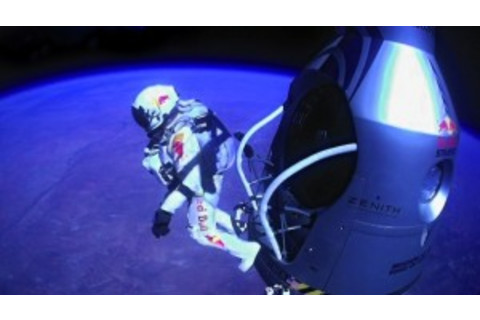
所以很抱歉让你失望:你当然不住在“黑客帝国”中。你正在观察一个真实的宇宙,它有好的和坏的,以及它有意识的生物,对存在的谜团感到惊叹。我们是宇宙的意识(即使在其他文明中可能有其他人)。我们在这个星球上进化,发展出自我意识、有意识的大脑,从某种意义上说,通过我们,整个宇宙获得了意识和自我意识。我认为这是一个足够深刻的想法,所以我们真的不需要考虑那些漂浮的玻尔兹曼大脑的可疑存在。但如果你愿意,我们可以接下来讨论有多少天使可以在针尖上跳舞。* 注意:使用几何分布进行一阶近似,发生的平均时间是无限的。(如果有兴趣,我可以在评论中详细说明。)